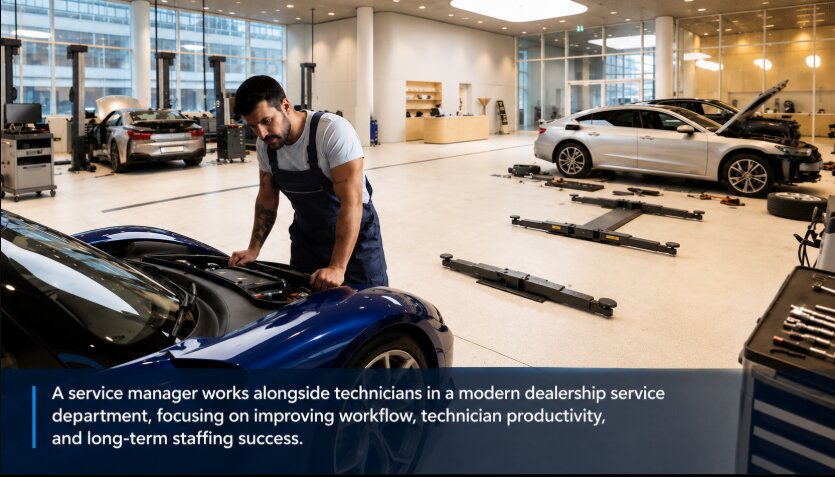
Dealership service bays across the country are sitting empty while repair orders pile up on service counters. The lack of qualified mechanics directly limits labor capacity, lengthens turn times, and drives down effective labor rates. Learning how service managers can solve technician shortages requires a combined approach focused on modern recruitment, modernized pay structures, improved shop culture, and optimized dispatch workflows. By fixing internal operational bottlenecks and creating clear career pathways, service leaders can attract skilled talent and navigate the skilled technician shortage that is bringing dealers to crisis.
Key Takeaways
- Fix Internal Bottlenecks First: Optimize parts availability and dispatching to maximize billable hours for the current staff before relying solely on hiring.
- Modernize Compensation: Offer clear career paths, competitive tool allowances, and transparent pay structures rather than relying solely on traditional flat-rate systems.
- Streamline the Hiring Process: Speed up interviews and candidate communication to secure skilled mechanics before competing shops do.
- Invest in Service Advisor Training: Well-trained advisors improve repair order accuracy and customer communication, saving technicians valuable shop time.
- Partner with Local Schools: Build direct pipelines with local vocational schools and community colleges to nurture entry-level talent early.
How Does Shop Culture Impact Technician Retention?
A positive shop culture improves technician retention by creating an environment where mechanics feel valued, equipped, and supported daily. Technicians rarely leave a dealership solely over hourly rates; they leave because of poor leadership, broken shop equipment, disorganization, and friction with service advisors.
Service managers can immediately elevate shop culture by focusing on communication and working conditions. Simple operational upgrades make a massive difference in daily morale:
- Upgrade Shop Tools and Equipment: Maintain modern diagnostic tools, functional lifts, and efficient fluid management systems so technicians do not waste unbillable time hunting down working gear.
- Improve Service Advisor Alignment: Train advisors to write thorough, accurate repair orders. Understanding why more service traffic isn’t the answer helps managers focus on improving advisor-technician teamwork so mechanics spend less time diagnosing vague issues.
- Recognize and Reward Performance: Implement clear recognition programs that reward efficiency, fix-it-right-first-time metrics, and mentorship of junior technicians. Explore non-traditional ways to motivate service technicians to keep team morale high.
When leadership actively removes daily frustration from the shop floor, turnover drops significantly.
What Compensation Strategies Attract Top Technicians?
To attract top technicians, service managers must offer flexible compensation packages that provide financial stability alongside performance incentives. While experienced technicians often thrive under flat-rate pay, younger technicians frequently prefer guaranteed base pay or tiered hourly structures while building their skill sets.
Compensation Models Comparison
| Compensation Model | Best For | Key Advantage |
| Tiered Flat-Rate | Experienced Master Technicians | High earning potential for speed and efficiency. |
| Base Hourly + Bonus | Entry-Level & Express Technicians | Financial predictability and safety. |
| Team Efficiency Pay | Collaborative Main Shop Teams | Encourages mentorship and teamwork. |
Beyond Baseline Wages: Top technicians evaluate total compensation value. Dealerships can stand out by offering tool allowances, sign-on bonuses distributed over time, paid manufacturer training during work hours, certification reimbursement, and tuition assistance.
Leadership teams interested in elevating overall service department performance can explore targeted management resources and join live weekly coaching sessions through SDR Live Academy to streamline service operations and advisor execution.
How Can Managers Optimize Shop Workflows to Boost Capacity?
Managers can boost shop capacity by removing administrative and operational delays that prevent technicians from turning wrenches. Increasing labor output does not always require adding physical headcount; often, it requires recapturing lost billable hours within the existing team.
To streamline workflow efficiency, service managers should focus on three practical steps:
- Implement Electronic MPIs: Digital multi-point inspections speed up approval times by sending photos and videos directly to customers, reducing lift downtime. Managers are also exploring the benefits of AI in automotive service to automate diagnostic routing and streamline administrative tasks.
- Pre-Stage Parts for Scheduled Jobs: Work with the parts department to pull and stage required components for morning appointments before the technician starts the job.
- Optimize Dispatch Systems: Assign repair orders based on specific skill sets rather than simple round-robin systems. Matching the right job to the right technician skill level prevents bottlenecks on complex electrical or engine diagnostics.
According to research from the National Automobile Dealers Association (NADA), optimizing fixed operations efficiency remains one of the single most reliable ways to secure overall dealership profitability.
How Do You Build an Apprentice Pipeline from Scratch?
Building an apprentice pipeline requires forming active partnerships with local vocational institutes, high schools, and trade colleges. Rather than waiting for experienced B-level or A-level mechanics to apply, proactive service managers build their own talent from the ground up.
Start by visiting local technical school career fairs and offering shop tours to prospective students. Providing paid internships or part-time express lane positions allows candidates to get comfortable with dealership processes while finishing their credentials. Pairing each apprentice with a seasoned mentor ensures proper skill transfer. Mentors should receive financial incentives or production credits for coaching junior staff, ensuring they stay fully invested in the apprentice’s growth.
For further insights on training service personnel and improving dealership communication, review the industry guides available on the Service Drive Revolution Blogs.
Frequently Asked Questions
What is the fastest way to recruit automotive technicians?
The fastest way to recruit automotive technicians is through employee referral programs that offer financial rewards to current shop staff for introducing qualified mechanics. Internal recommendations yield high-retention hires quickly because technicians understand the shop environment and only recommend peers who fit the culture.
Should dealerships eliminate flat-rate pay to solve shortages?
Dealerships do not necessarily need to eliminate flat-rate pay, but offering flexible hybrid compensation models helps attract broader talent pools. Guaranteeing baseline pay for entry-level mechanics while offering high-yielding flat-rate structures for senior technicians balances financial stability with productivity incentives.
How does service advisor performance affect technician retention?
Service advisor performance directly impacts technician retention because poorly written repair orders and inaccurate labor estimates lead to unbillable diagnostic time and lost earnings. High-performing advisors set proper customer expectations, capture detailed vehicle symptoms, and sell primary and secondary recommendations clearly.
Bottom Line
Understanding how service managers can solve technician shortages comes down to building a supportive work environment, offering competitive pay structures, and removing daily operational bottlenecks from the shop floor. Service leaders who invest in clear career pathways and efficient dispatch processes gain a distinct competitive advantage in hiring and retaining top talent. Audit your current shop workflow today to identify and eliminate lost billable time for your existing technicians.