Direct Answer
The most transformative books to reset your nervous system explain fight-or-flight mechanisms clearly, remove shame around survival states, and provide practical tools for regulation. A solid nervous-system reading list guides readers toward understanding stress signals, prioritizing genuine rest, and forming habits that make calm accessible.
The best reading on regulation does not shame the reader for being dysregulated. It explains why the body reacts and what small practices help restore choice.
How to Read This Kind of Book
The goal is not to finish every page quickly. The goal is to notice which explanation gives the body relief and which practice is simple enough to repeat on an ordinary day.
That turns nervous system reading into an experiment in attention, not a performance of wellness.
Five Books That Help Reset Your Nervous System
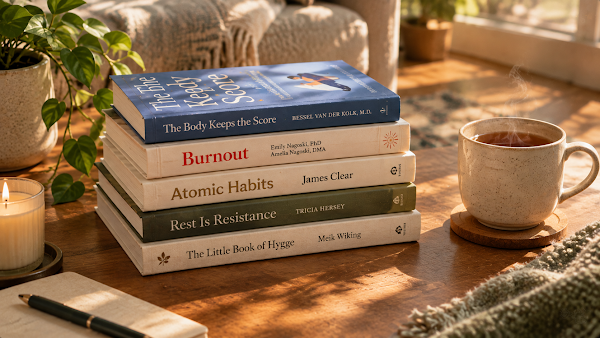
The Body Keeps the Score: Demystifies the ways implicit trauma and physical stress remain embedded in physical tissues.
Daily practice: Somatic body scanning. Before I touch my phone in the morning, I spend three minutes scanning my body from feet to head, noticing where I’m holding tension, and consciously releasing it on the exhale.
Anchored: Breaks down polyvagal theory into relatable, daily actions for grounding a reactive system.
Burnout: Highlights why the physical mechanics of stress completion are essential for recovery rather than just coping mentally.
Daily practice: Discharge stress through movement. After a stressful call or conversation, I don’t just sit there simmering. I shake it out, literally dance for twenty seconds, do ten slow belly breaths, or hug someone. It sounds silly. It works. Read more on completing the stress cycle.
Why We Sleep: Illustrates how proper sleep acts as mandatory biological maintenance rather than secondary downtime.
Atomic Habits: Teaches how small, repeatable routines make nervous system regulation effortless over time.
Somatic reading works best when the lesson becomes a practice, not just an idea. The point is to build a calmer relationship with the body one cue at a time.
What These Books Have in Common
They decode physical stress reactions: You cannot reset your nervous system by ignoring the body’s internal alarms. These titles break down why physical responses occur before conscious thought takes over.
They offer actionable regulation strategies: Techniques like breathwork, restorative rest, movement, clear boundaries, and micro-habits become far more effective when you understand how they signal safety to your brain.
They replace self-blame with compassion: Feeling overwhelmed or reactive often triggers guilt. High-quality somatic literature reframes these states as natural protective functions that can be gently retrained.
How to Use the List Without Overwhelming Yourself
Pick a single title that addresses your most frequent physical symptom.
Pace your reading to observe how your body reacts to new concepts.
Implement one regulation exercise for a full week before adding another.
Gauge success by noticeable physical relief rather than popular trends.
Pair reading with clinical care when navigating deep-seated trauma.
None of this requires quitting your job or overhauling your life. It’s boundaries, breaks, and letting your body finish the stress cycle it’s already trying to complete. A lot of this also comes down to reclaiming a sense of internal locus of control: recognizing that even if you can’t control the stressor, you can control how you respond to it.
Frequently Asked Questions
Can a book really help reset your nervous system?
While reading isn’t a replacement for therapy or medical treatment, informative books build body literacy and equip you with practical tools to cultivate daily ease.
Which book should you pick first?
Base your decision on immediate needs: opt for trauma literature for self-understanding, or select habit-building guides for practical, daily tools.
What is the most common mistake readers make?
Treating nervous system regulation like another task to optimize. To truly reset your nervous system, your self-care practices must feel safe, gentle, and sustainable.
Bottom Line
Books serve as powerful resources when you want to reset your nervous system, demystifying body responses and making self-care actionable. The right reading list delivers clarity, empathy, and small practices that bring lasting calm within reach.
Related Readings:
- Can Reading Make You Happy?
- What the World’s Leaders are Reading: Top Books for Aspiring Leaders
- Habit Formation.
- Related reading on queuepost.com: Tori Kelly: Ruthless Elimination Is Pure Peace in a Book; Emily Silva: Wild Edge of Sorrow Is Pure Grief and Healing.