Direct answer: What Frankenstein shows about masks and agency
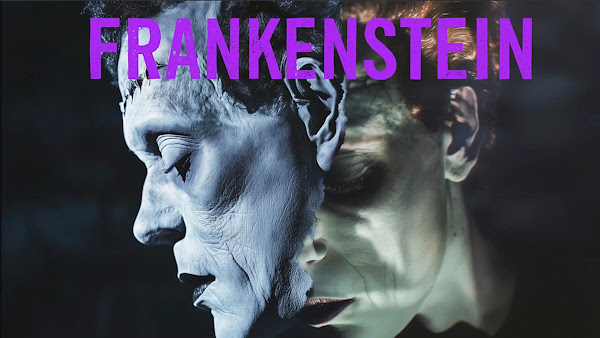
In short: Mary Shelley’s Frankenstein dramatizes what happens when a creator abandons a dependent being—an image that maps directly onto how parents, communities, or culture can shape a child’s identity. The “monster” becomes a living example of how protective personas (masks) and unexamined childhood programming produce automatic adult behaviors unless we consciously choose an internal locus of control.
Fresh introduction: reading Frankenstein as a mirror for personal development
Mary Shelley’s novel is commonly read as a gothic horror or a warning about scientific hubris. Read another way, it is a study of belonging, abandonment, and the psychological architecture we inherit from those who raise us. Victor Frankenstein is the creator who withdraws; the creature is the self left to learn its value in a hostile world. That dynamic mirrors how many of us were taught—by parents, teachers, and social norms—to hide, adapt, or adopt personas just to survive.
How childhood builds masks and why they persist
Young children are biologically wired to seek acceptance and safety from caregivers. As early as four or five, we notice that specific behaviors draw predictable responses from adults. When survival depends on approval, children often trade parts of themselves for acceptance.
Common protective responses that become masks
- People-pleasing: minimizing needs to keep caregivers calm.
- Defensiveness or aggression: a shield against repeated criticism or rejection.
- Perfectionism: overperformance to prove worth.
- Withdrawal or invisibility: staying small to avoid scrutiny.
Over time, a person can accumulate several of these masks. They may help short-term survival but create energy-draining dissonance when they conflict with the person’s core values.
When neglect becomes automatic behavior: behavioral cascades
Gaps in early emotional care are rarely neutral; they create openings that outside forces—media, consumer culture, social movements—often fill. As the original observation puts it, “Marketing, consumerism, pop culture, and social movements quickly nudge their way in to fill the vulnerable gaps in our identity. If you don’t intentionally design your own architecture, the outside world will design it for you.”
What a behavioral cascade looks like
- An early wound (e.g., feeling ignored) installs a belief (I must be loud to be seen).
- That belief triggers routine adult behaviors (buying status symbols, seeking attention).
- Those behaviors produce short-term relief but long-term contradiction (visibility feels uncomfortable).
These cascades are not evidence of immutable character; they are patterns that repeat because they were never reprogrammed.
Reclaiming control: the case for an internal locus
You cannot rewrite your childhood facts, but you can change how those facts run your life now. Moving from an external to an internal locus of control means taking responsibility for the mental routines that direct your choices. That shift weakens the masks and gives you back the energy used to maintain them.
Choose deliberate practices—journaling, small experiments in authenticity, therapy, and consistent reflection—to notice when an old program is running and then rewrite it. For philosophical context on self-authorship and responsibility, see Existentialism and Human Freedom on Stanford Encyclopedia of Philosophy.
Practical steps to dismantle negative masks
- Inventory: List the personas you habitually put on and the situations that trigger them.
- Trace origins: Note the childhood circumstances or messages that created those responses.
- Test small: Try brief, low-risk acts of authenticity to gather new evidence about yourself.
- Replace with practice: Use daily habits (journals, habit trackers) to reinforce new patterns.
- Engage community: Discuss and refine insights inside a reflective group or course.
Where community and materials can help
Parsing and rewriting lifelong patterns is easier with sustained dialogue and tools. Inside the Syndicate X Library community, members work through frameworks that expose mental architecture and offer structured practice. To support daily tracking and guided exercises, consider the I AM LEADER Workbook for Leadership Mastery.
For a related reading on myth and personal narrative, see Jena Malone on The Flowering Wand and Rewriting Myths.
Frequently Asked Questions
Why is Frankenstein considered an analogy for parenting and leadership?
Frankenstein portrays the consequences of creating life and then abandoning responsibility. In parenting and leadership, the same dynamic occurs when a creator—parent or leader—fails to attend to the needs, culture, or development of what they’ve brought into being, producing disconnection and dysfunction instead of thriving.
How do protective masks harm personal growth?
Protective masks help in the short term by reducing exposure to perceived threats, but they lock you into a performance that doesn’t reflect your authentic self. Over time this leads to inner conflict, wasted energy, and fewer opportunities to build genuine self-worth.
What is a “behavioral cascade”?
A behavioral cascade is a chain reaction in which an old insecurity or unchallenged belief automatically triggers habitual adult actions. Those actions then reinforce the original belief, creating a self-perpetuating loop unless one deliberately interrupts it.
Where can I access the full video course on Frankenstein?
The complete video masterclasses, study guides, and community boards mentioned in this article are hosted inside the private Syndicate X Community Platform, where members dive deeper into these themes.
Final reflection: drop the masks with intention
We all carry pieces of the “monster” within—responses formed to survive early emotional conditions. But adult life offers the capacity to observe those responses and choose new ones. Start by identifying one mask you’d like to retire and try one concrete step today toward a more self-authored life.
To continue this work, explore the I AM Leader Bookset and join the Syndicate X Library to practice leadership and identity design with others.
Related reading on queuepost.com: Did You Know Your Agency and Power of Choice Are Yours?; Inside the Internal Locus of Control Every Leader Needs.