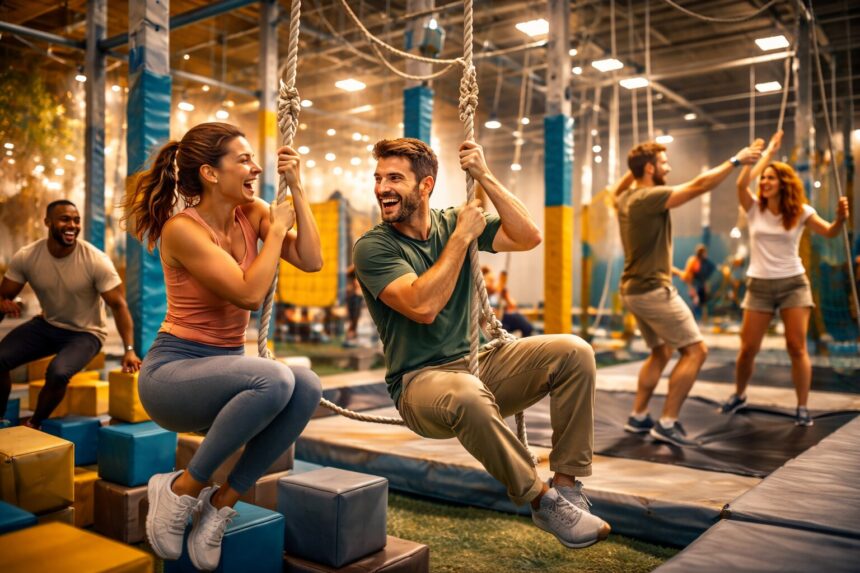
Adults are choosing play over the gym in 2026 because traditional workouts feel repetitive and isolating, while play-based movement offers social connection, stress relief, and enjoyment. This shift reflects a broader change in how people approach fitness—not as discipline, but as experience.
Adults choosing play over the gym describes a growing trend where structured exercise routines are replaced with movement-based activities like climbing, games, and group play that prioritize enjoyment over performance. These environments emphasize participation rather than metrics.
The trend is visible across cities, where adult playgrounds, movement studios, and group-based activities are drawing people away from conventional gyms. Instead of tracking reps and calories, participants are focusing on how movement feels—and who they share it with.
What Does It Mean to Choose to Play Over the Gym?
Choosing play over the gym does not mean abandoning fitness. It means redefining what counts as exercise.
Play-based fitness includes activities like obstacle courses, parkour-style movement, trampoline workouts, and interactive group games. These formats blur the line between exercise and recreation.
Unlike traditional gyms, which often center on individual performance, play environments are designed for interaction. People move together, respond to each other, and engage in spontaneous activity.
This shift changes motivation. Instead of pushing through routines, participants stay active because the experience itself is enjoyable.
Why Are Adults Choosing Play Over the Gym?
The shift toward play reflects dissatisfaction with conventional fitness culture. Many people find gyms repetitive, time-consuming, and mentally draining.
Play-based environments offer a different experience. They reduce pressure by removing strict goals and replacing them with open-ended movement.
Research from the American Psychological Association shows that physical activity reduces stress, but enjoyment increases consistency. People are more likely to maintain habits that feel rewarding.
Play also encourages intrinsic motivation. Instead of exercising to meet external standards, participants move because they want to.
This difference explains why play-based fitness is gaining traction across age groups.
The Rise of Adult Playgrounds and Social Fitness Spaces
Urban spaces are adapting to this demand by creating environments designed specifically for adult play. These include indoor playgrounds, climbing gyms, and interactive fitness studios.
These spaces prioritize accessibility and engagement. Equipment is designed for exploration rather than strict routines.
The growth of social fitness spaces reflects a key behavioral shift: people want exercise to feel communal. Group play encourages participation without the pressure of competition.
Common features of these environments include:
- Open layouts that allow for free movement and spontaneous interaction. Participants can explore without following a fixed sequence.
- Group-based activities that encourage collaboration rather than comparison. This reduces intimidation for beginners.
- Flexible sessions that adapt to different skill levels, making the experience inclusive and repeatable.
These elements make play-based fitness more approachable than traditional gyms.
How Phone-Free Workouts Are Changing Fitness Culture
Another defining aspect of this trend is the move toward phone-free environments. Many play-based fitness spaces restrict device use during sessions.
This shift addresses a common issue in traditional gyms: distraction. Phones interrupt focus, reduce engagement, and isolate participants.
Phone-free workouts create a more immersive experience. Participants engage fully with their environment and with each other.
The benefits are noticeable:
- Increased focus on movement, leading to better coordination and body awareness.
- Stronger social interaction, as participants communicate and collaborate in real time.
- Reduced mental clutter, allowing individuals to disconnect from digital stress.
These factors contribute to the appeal of play-based fitness.
Why Does Play Reduce Stress More Effectively?
Play engages the brain differently than structured exercise. It combines physical activity with creativity and spontaneity.
According to the Harvard Medical School, activities that involve enjoyment and novelty can lower cortisol levels more effectively than repetitive routines. This makes play a powerful tool for stress management.
Play also activates curiosity. Participants focus on exploration rather than performance, which reduces pressure.
This approach aligns with how people naturally learn and adapt. Movement becomes intuitive rather than forced.
As a result, play-based fitness supports both physical and mental well-being.
What This Trend Says About Modern Lifestyle Choices
The rise of adults choosing play over the gym reflects a broader rejection of rigid productivity culture. People are reevaluating how they spend their time and energy.
Fitness is no longer just about efficiency or measurable outcomes. It is becoming part of a larger lifestyle focused on balance and well-being.
This shift connects to other cultural trends, including slow living, digital detox practices, and community-focused activities. People are prioritizing experiences that feel meaningful rather than purely functional.
It also highlights a change in how success is defined. Instead of tracking performance metrics, individuals are focusing on consistency, enjoyment, and connection.
This shift also reflects a broader focus on wellness choices, where people are questioning traditional fitness and health norms, similar to discussions around Are “Lemme” Supplements Legit?.
How Movement-Based Play Is Redefining Fitness
Movement-based play is changing how fitness is designed and experienced. It introduces flexibility, creativity, and adaptability into routines.
Unlike traditional workouts, which often follow fixed patterns, play-based movement evolves with the participant. Each session can feel different.
This variability keeps people engaged. It also reduces burnout, which is a common issue with repetitive exercise programs.
As more spaces adopt this model, the definition of fitness continues to expand. It becomes less about discipline and more about participation.
This emphasis on rhythm, flow, and creative movement mirrors how other fields value humanized, less rigid systems, as explored in Dilla Time and the Birth of Humanized Hip-Hop Beats.
Conclusion
Adults choosing play over the gym reflects a shift toward fitness that prioritizes enjoyment, connection, and mental well-being. Movement is no longer just a task—it is an experience shaped by creativity and social interaction.
As people continue to redefine what exercise means, play-based fitness offers a model that fits modern life more naturally. It suggests that staying active does not require strict routines, only the willingness to move.
External Sources:
- Mayo Clinic Exercise and stress: Get moving to manage stress
- Harvard Health Exercise is an effective stress-buster
Frequently Asked Questions
Why are adults choosing play instead of the gym?
Adults are choosing play because it feels more enjoyable and less stressful than traditional workouts. It combines movement with social interaction and creativity.
Are adult playgrounds effective for fitness?
Yes. Movement-based play improves strength, coordination, and endurance while also supporting mental health through reduced stress and increased engagement.
Do phone-free workouts really make a difference?
Yes. Removing phones helps participants stay focused, interact more with others, and fully engage in the activity, improving both physical and mental outcomes.